


The strange thing about immigration is that nobody tells you which parts of yourself you’re allowed to keep.
You expect to learn a new language, a new workplace culture, a new way of making friends. What you don’t expect is the accumulation of tiny compromises. The food changes. The holidays change. The way people greet each other changes. And sometimes, without realizing it, you abandon perfectly sensible habits simply because nobody around you does them anymore.
For fifteen years, I treated dry toilet paper as one of those compromises. It was small enough to ignore and too awkward to discuss. It took a doctor, a colonoscopy, and a bidet to make me realize that adaptation and improvement aren’t always the same thing.
I’m going to tell you about a product that lives in my bathroom, costs about as much as a weekend getaway, and has genuinely changed my life. And yes, I’m going to talk about it the way a PM would in an interview — because after years in Silicon Valley, I can’t help myself. Bear with me.
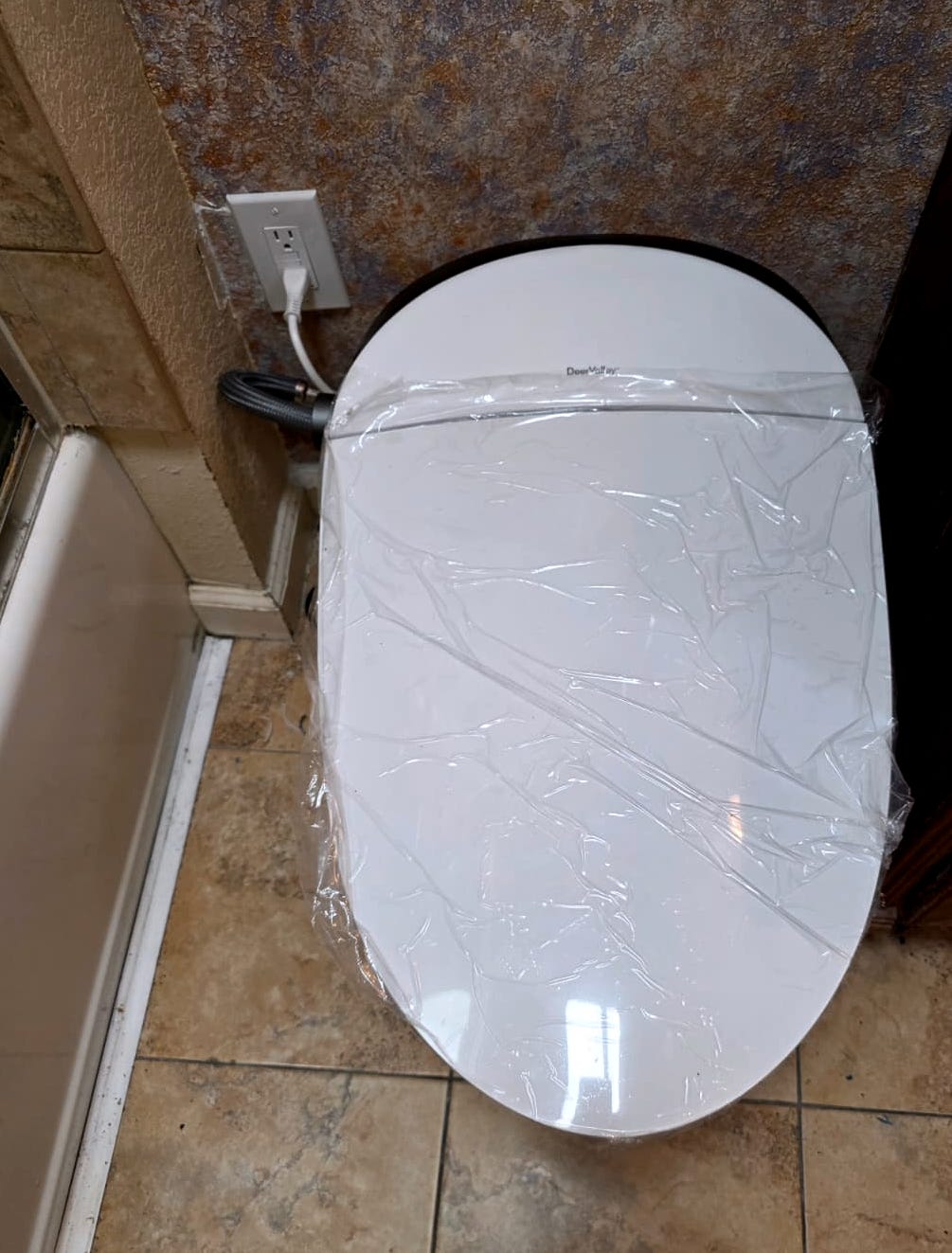
The product is a Bio Bidet. And the tagline I’d give it? The most shittiest product I’ve ever loved. 😄
First, Let Me Set the Scene
I grew up in Kanpur. Water was the way. Always. The idea of only using paper was, frankly, baffling — like licking a plate clean instead of washing it. Then I moved to USA, land of innovation, cold brew, and apparently, a deeply entrenched dry-paper toilet culture.
I adapted. Like a good immigrant, I assimilated. For years, I told myself this was fine.
It was not fine.
I won’t go into every detail (you’re welcome), but when my doctor ordered a colonoscopy a while back, and then sat me down afterward to gently suggest I go back to water washing — I didn’t argue. Suddenly, every small chronic discomfort I’d normalized over the years made sense. The solution wasn’t a prescription. It was a bidet.
Enter: the Bio Bidet.
The PM Take: What Problem Does It Actually Solve?
Okay, let’s do this properly. If I were pitching Bio Bidet in a product sense interview, here’s how I’d break it down.
Who is the user? Anyone who uses a toilet. That’s your TAM right there. Global. Enormous. Undeniably seated.
What are the pain points?
Recurring cost. Toilet paper is a subscription you never signed up for. The average American spends over $100 a year on it — and that’s before you account for the panic-buying surges (we all remember 2020). A bidet seat is a one-time purchase — and between toilet paper, wipes, and specialty products you no longer need, it pays itself off over a few years while your bathroom routine gets dramatically better. The unit economics are embarrassingly good.
Hygiene. Here’s an uncomfortable truth: paper doesn’t actually clean. It smears. If you got mud on your hand, you wouldn’t wipe it with a tissue and call it a day. Water cleans. A bidet with a warm water wash leaves you genuinely, actually clean — not just “acceptable by bathroom standards” clean. For anyone recovering from a procedure, managing a skin condition, or just caring about their body, this matters enormously.
Skin sensitivity and allergies. Many people don’t realize their “sensitive skin” flare-ups are triggered by the dyes, fragrances, or bleaching agents in toilet paper. Switching to water eliminates the variable entirely. No more specialty “sensitive” paper brands, no more irritation.
The luxury tier — blow dry. Some Bio Bidet models include a warm air dryer. You sit, you wash, you dry — completely hands-free, completely contactless. It sounds indulgent. It is indulgent. It’s also the kind of feature that, once you’ve used it, makes going anywhere else feel like a step backward. Hotels, airports, other people’s homes — suddenly they all feel mildly inadequate.
Why now? Because American homes have been the outlier for too long. In Japan, over 80% of households have bidet toilets. They’re standard in most of South Asia, Southern Europe, and the Middle East. The rest of the world solved this problem decades ago. The U.S. is just catching up — and Bio Bidet is leading that wave without requiring you to gut your bathroom.
What’s the unfair advantage? Installation takes under 30 minutes with no plumber, no special wiring for most models, and no structural changes. The barrier to switching is nearly zero. The moat, once you’ve switched, is near-infinite. No one goes back.
The Cultural Whiplash Is Real — And Nobody Talks About It
Here’s what the product reviews don’t tell you: switching toilet hygiene habits is a surprisingly emotional experience.
When I moved from Kanpur to USA, adapting to dry paper felt like a small betrayal of something deeply ingrained. Every culture has rituals around cleanliness, and this one hit differently. I didn’t know how to explain it to coworkers at a lunch table (”So interesting cultural observation about bathrooms...”) — so I just quietly adapted and hoped for the best.
Going back to water was, in its own strange way, coming home. There’s a reason bidets are universal across so many cultures — it’s not novelty, it’s just logic. Warm water, gentle pressure, and suddenly everything is right with the world.
Japan gets this. They made it an art form. Walk into any mid-range hotel in Tokyo and you’ll find a seat with more buttons than my first laptop. Heated seat, front and rear wash, adjustable pressure, dryer, deodorizer — the whole thing. It’s not considered luxurious there. It’s considered basic.
We’re just late to the party.
The Verdict
Bio Bidet sits at the intersection of good health, good economics, and — I say this with complete seriousness — good vibes. It’s refreshing in a way that’s hard to explain until you’ve experienced it. Every morning (or whenever I go) feels a little more civilized.
My doctor recommended it for medical reasons. My inner PM validated it on unit economics. My Kanpur childhood recognized it as something that should have been there all along.
And my California self? Frankly embarrassed, it took a colonoscopy to get here.
If you’re on the fence, get off it. (Pun very much intended.) The Bio Bidet is the most shittiest, most underrated, most life-improving $600–$1,200 you’ll spend this year.